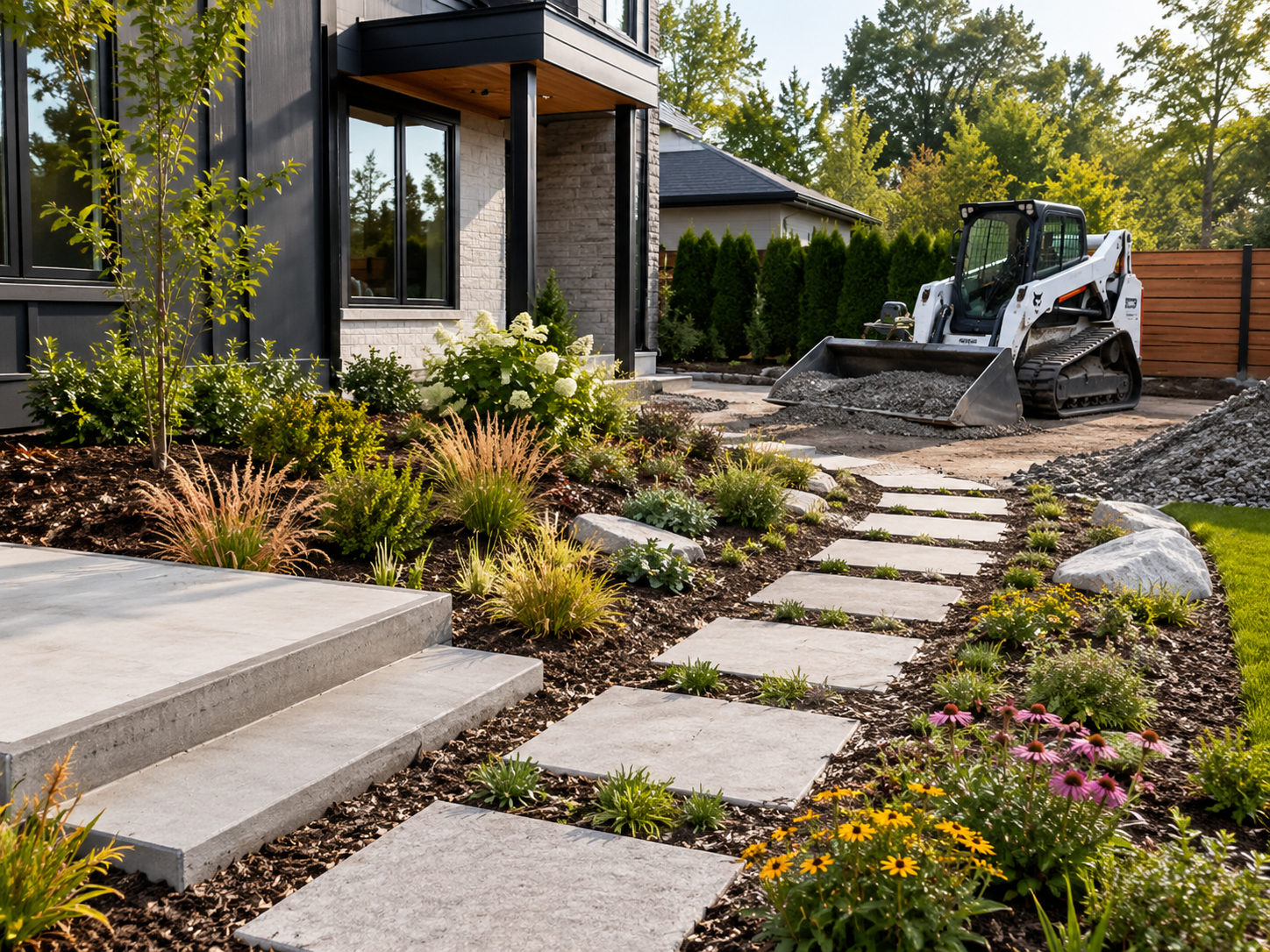
Home and commercial garden projects often begin with the way people move through the space. Garden stepping stones can create a clear path across lawns, between garden beds, through courtyards or towards outdoor seating areas without making the design feel heavy or overbuilt. In a home setting, they can guide visitors from the driveway to the front door or connect the back door to a vegetable patch, shed or entertaining zone. In commercial gardens, they can help define informal access routes around office landscapes, accommodation spaces, cafes, childcare centres and retail entries while keeping the area neat and easy to understand.
Larger outdoor improvements often require more than hand tools, especially when soil, gravel, mulch, rock or old garden material needs to be moved efficiently. Mini loader hire can be useful for both residential and commercial landscaping because it helps reduce manual labour on jobs where access is limited but the workload is still substantial. A compact machine can assist with clearing garden areas, preparing surfaces, shifting bulk supplies and levelling sections before new paths, garden beds or turf are installed. For homeowners, this can make a weekend upgrade more manageable. For commercial sites, it can help keep work moving with less disruption to daily operations.
Structural garden work may also call for reliable materials that can be placed in smaller quantities without over-ordering. Mini mix concrete can suit projects such as setting posts, forming small slabs, securing edging, building shed bases, repairing pathways or creating practical service areas. In home gardens, it may support small improvements around clotheslines, bins, steps or outdoor storage. In commercial settings, it can help with practical upgrades around garden entries, maintenance zones, signage footings or compact paved areas where durability is important.
A strong garden plan balances presentation with function. Decorative choices matter, but outdoor spaces must also handle everyday use. A path should feel natural to follow, a surface should suit the amount of foot traffic, and garden beds should be positioned where they can be maintained without difficulty. When these details are considered early, the finished result feels more organised and performs better over time.
For homeowners, garden supplies can help turn underused spaces into practical outdoor areas. A narrow side path can become easier to walk through, a lawn can gain structure, and a simple garden corner can become a more inviting place to sit. Small changes can also improve the way a property feels from the street, especially when paths, planting and hard surfaces work together.
Commercial gardens need similar thinking, but on a broader scale. A business frontage, shared courtyard, display yard or customer entry needs to look professional while also supporting regular use. Materials should be selected for appearance, safety, maintenance and long-term value. A well-planned outdoor area can help customers, staff and visitors move comfortably through the site while creating a stronger impression of care and organisation.
Site preparation is often the difference between a garden that looks good briefly and one that continues to work well. Before new materials are installed, it is worth thinking about drainage, levels, soil condition, access and how the area will be used throughout the year. This applies to small backyard projects as much as larger commercial landscapes. Good preparation helps reduce future issues and makes each supply choice more effective.
The best garden upgrades do not always need to be large or complex. Clear pathways, practical machinery support, suitable concrete, defined planting areas and durable surfaces can all help create outdoor spaces that feel finished and reliable. Whether the project is a home refresh or a commercial landscape improvement, thoughtful garden supply choices can make the area easier to use, easier to maintain and more appealing every day.